




Taxation Issues of Firms with Market Power to Improve Market Efficiency in a High-Inflation Era
Dr. Professor Giorgi Rusiashvili
This presentation explores how tax policy could be used to curb inflation by targeting firms with significant market power. Drawing on classical and modern economic theory, and on concentration metrics such as the HHI and the Lerner Index, it proposes a taxation framework linked to market concentration and product life-cycle position.
Taxation Issues of Firms with Market Power to Improve Market Efficiency in a High-Inflation Era
Dr. Professor Giorgi Rusiashvili
This presentation explores how tax policy could be used to curb inflation by targeting firms with significant market power. Drawing on classical and modern economic theory, and on concentration metrics such as the HHI and the Lerner Index, it proposes a taxation framework linked to market concentration and product life-cycle position.
Theoretical background
The presentation situates its hypothesis within a long tradition of tax theory — from the classical view that higher taxes ultimately raise prices and reduce demand, through Keynesian and Pigouvian ideas linking taxation to income growth and the financing of public goods, to the Wicksell–Lindahl benefit principle, under which tax burdens should reflect the benefits individuals and firms derive from public services. It also notes the differing economic role of SMEs — which generate significant employment and social value but limited growth — versus larger corporations, which drive innovation and economic value but can also accumulate market power.
Measuring market concentration and power
Two established metrics anchor the analysis. The Concentration Ratio (CRn) measures the combined market share of the largest firms, distinguishing low (below ~40%), medium/oligopolistic (40–70%) and high concentration (70–100%). The Herfindahl–Hirschman Index (HHI), the sum of squared market shares, is widely used by competition authorities: an HHI increase of under 100 points is generally considered non-problematic, 100–1,500 points unconcentrated, 1,500–2,500 moderately concentrated, and above 2,500 highly concentrated and likely anti-competitive. The Lerner Index — (P − MC)/P — separately measures the degree to which a firm prices above marginal cost, ranging from 0 (perfect competition) towards 1 (pure monopoly), and is presented as a proxy for how much market power a firm is actually exercising, complementing the structural information given by HHI.
The Neo-Brandeis hypothesis
Building on the Neo-Brandeis view that concentrated private power distorts competitive and democratic conditions, the central hypothesis is that taxing firms in proportion to market concentration (HHI/CRn) and market power (the Lerner Index), while adjusting for a firm's position on the Boston Consulting Group growth-share matrix (lighter taxation for Stars and Question Marks that need room to invest or enter the market; heavier taxation for Cash Cows extracting rents in mature, low-growth markets), would compress excess markups and thereby ease inflationary pressure. The mechanism operates through three channels: a direct price channel (lower markups reduce prices), a competition channel (taxation reduces the incentive to entrench dominance and encourages new entry), and a demand channel (increased competition raises output and lowers equilibrium prices).
As Neo-Brandeis tax policy works by attacking the link between market concentration → pricing power → inflation, forcing prices closer to marginal cost. HHI tells us who can have power. Lerner tells us who is using that power.
Balancing competition policy with innovation incentives
The presentation also cautions that policy should not indiscriminately penalise scale: strong intellectual property protection and the ability to capitalise development costs (as under IAS 38) remain important incentives for firms to invest in innovation, and R&D incentives allow firms to earn returns through genuine innovation rather than through market-power-driven markups. The proposed conclusion is that nations combining credible IP protection with tax policy that discourages rent-extraction from concentrated market power are best placed to sustain innovation-driven growth without fuelling inflation.
Conclusions
1. Conceptual Framework: Intellectual Property Rights and Dynamic Competition
A prevalent paradigm in institutional economics posits that the state catalyzes innovation through the codification and enforcement of robust Intellectual Property Rights (IPR). This mechanism is operationalized through a causal sequence: stringent legislative IPR protections mitigate market failures associated with non-excludable knowledge spillovers. Consequently, firms are disincentivized from relying on static market-power markups and are instead incentivized to capture economic rents via technological differentiation and Research and Development (R&D).
This institutional design fosters dynamic competition (Schumpeterian competition), wherein market contestability shifts away from static price-competition among homogeneous agents. Instead, competition occurs dynamically among capitalized, innovation-driven enterprises capable of sustaining high-barrier technological advancements.
2. Theoretical Foundations and System Constraints
2.1 Optimization of Public Expenditure and Allocative Efficiency
The theoretical foundations of dynamic competition—predicated on the interplay between IPR enforcement, quality management frameworks, and macroeconomic growth opportunities—can be modeled via general equilibrium and property rights theory.
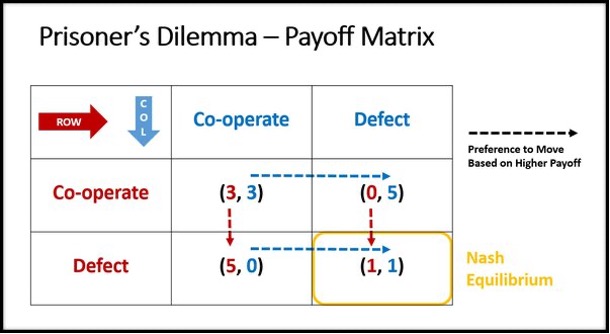
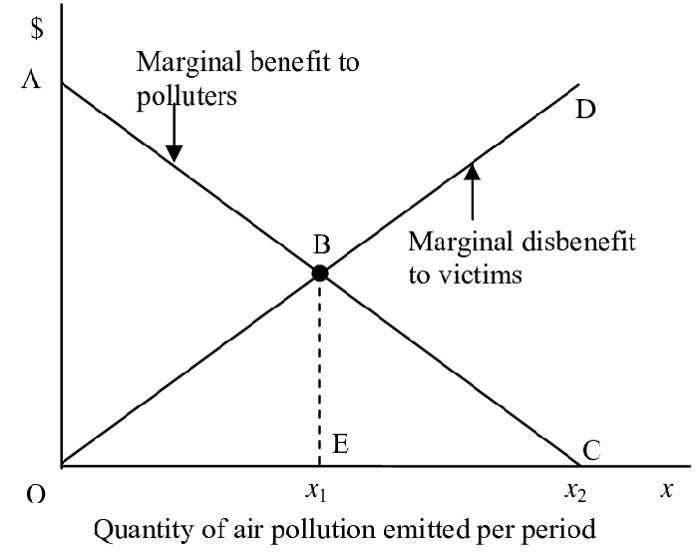
Under the framework of the Coase Theorem, the friction-free allocation and trade of property rights yield Pareto-optimal outcomes. As illustrated in Figure 1 (Social Benefit and Public Expenditure Optimization within Nash Equilibrium), the intersection of marginal policy enforcement vectors represents a strategic equilibrium. Point B defines the exact optimization vector where the competing policy objectives of open market competition and protectionist IPR frameworks minimize absolute public expenditure deadweight loss, maximizing social welfare.
Figure 1: Social Benefit under Dynamic Competition within the Nash Equilibrium
2.2 Paradigm Divergence: Corporatism vs. Free-Market Laissez-Faire
The operationalization of these mechanisms relies on distinct institutional assumptions regarding regulatory trajectories:
- The Corporatist/Regulatory Paradigm: Elevating IPR enforcement and institutionalized quality control to the level of state-directed corporatism inherently restricts consumer sovereignty. This trajectory runs counter to the classical and neo-liberal frameworks of Schumpeter, Weber, and Hayek. By shifting toward an interventionist, laissez-faire-antithetical model, excessive institutional codification risks systemic over-regulation and market calcification (analogous to highly centralized command economies characterized by restrictive regulatory frameworks).
- The Capitalist/Market-Driven Paradigm: Conversely, standard Western capitalist market designs prioritize market contestability. This approach weakens monopolistic IPR rigidities to lower barriers to entry, operating on the foundational legal principle of permissive liberty ("everything which is not explicitly forbidden is allowed").
This distinction reinforces the classical view articulated by the late Georgian economist Professor R. Basaria, who argued that state utility is maximized at the macroeconomic policy level rather than through microeconomic distortions, market-mapping, or municipal service micromanagement.
2.3 Macroeconomic Drivers and Tax-Induced Innovation
Long-run economic sustainability belongs to nation-states that actively subsidize and structurally facilitate an evolutionary, innovation-driven economy. Within the framework of evolutionary economics, this trajectory requires a baseline real GDP growth rate benchmarked at approximately 4% per annum.
Furthermore, empirical and theoretical models suggest a counterintuitive fiscal driver: elevated corporate tax environments can accelerate transition into an innovation-driven economy. Facing compressed margins due to fiscal extraction, firms aggressively invest in innovation and process optimization to sustain post-tax profitability targets (see Figure 2).
3. Accounting Standards and Treatment of R&D under IAS 38
To institutionalize these innovations at the firm level, corporate entities must apply strict accounting metrics, specifically International Accounting Standard 38 (IAS 38): Intangible Assets, to evaluate R&D expenditures.
3.1 Financial Treatment of R&D Costs
IAS 38 mandates a strict bifurcation of research and development phases based on uncertainty and asset recognition criteria:
- Research Phase: Expenditures incurred during the research phase are recognized as expenses in the period they occur. They represent uncapitalized operational losses reflective of inherent innovative business risk.
- Development Phase: Expenditures during the development phase are capitalized as intangible assets, provided they meet specific technical and financial viability thresholds.
To mitigate private risk and promote public-private alignment, state co-financing interventions can be structured similarly to capital depreciation allowances—for example, utilizing a 30% public to 70% private capital expenditure cost-sharing ratio.
3.2 IAS 38 Capitalization Criteria
Under IAS 38, an intangible asset arising from development must be recognized if, and only if, an entity can demonstrate all of the following conditions:
- Economic Benefit Generation: A high probability that future economic benefits attributable to the asset will flow to the entity.
- Reliable Measurement: The expenditure attributable to the intangible asset during its development phase can be measured reliably.
- Technical Feasibility: The technical feasibility of completing the intangible asset so that it will be available for internal use or commercial sale.
- Managerial Intent and Capability: The explicit intention, readiness, and systemic capability of the organization to complete, and subsequently use or sell, the asset.
- Market Viability or Utility: The existence of a defined market for the asset's output or, if intended for internal operations, documented evidence of its systemic utility.
Resource Availability: The availability of adequate technical, financial, and organizational resources to complete the development and realize the asset's value[1].
[1] Note: this is same as S.M.A.R.T. concept which is a widely used acronym that stands for Specific, Measurable, Achievable, Relevant, and Time-Bound


